“Shit that arrives at the speed of light is still shit.”
David Abbott
For most of advertising’s history, our biggest challenge was making things.
Ideas were limited by time, money, people and production. Not anymore.
Today, you can make almost anything. A campaign in an afternoon. A hundred headlines in a minute. Films before lunch. Or a strategy deck before you’ve decided whether the strategy is any good.
The barriers have collapsed. And that’s extraordinary. But it leaves us with a new problem.
Just because you can, doesn’t mean you should.
The advertising industry spent decades obsessing over execution. We built businesses around the ability to make things.
Now the machines can make things too.
In fact, they’re becoming alarmingly enthusiastic about it.
Which is why the most valuable skill in the age of AI may not be creation.
It may be restraint.
The ability to stop.
To pause.
To ask whether this deserves to exist before rushing to produce it.
Because abundance changes everything.
When ideas are expensive, you try to have more of them.
When ideas are free, you need to become better at rejecting them. Less starts to have value. I remember speaking to a curator at an art gallery once who said if you want a painting to seem important put a big white frame around it. Even better make it the only painting on the wall. Less says value. Less says the best. Less says special.
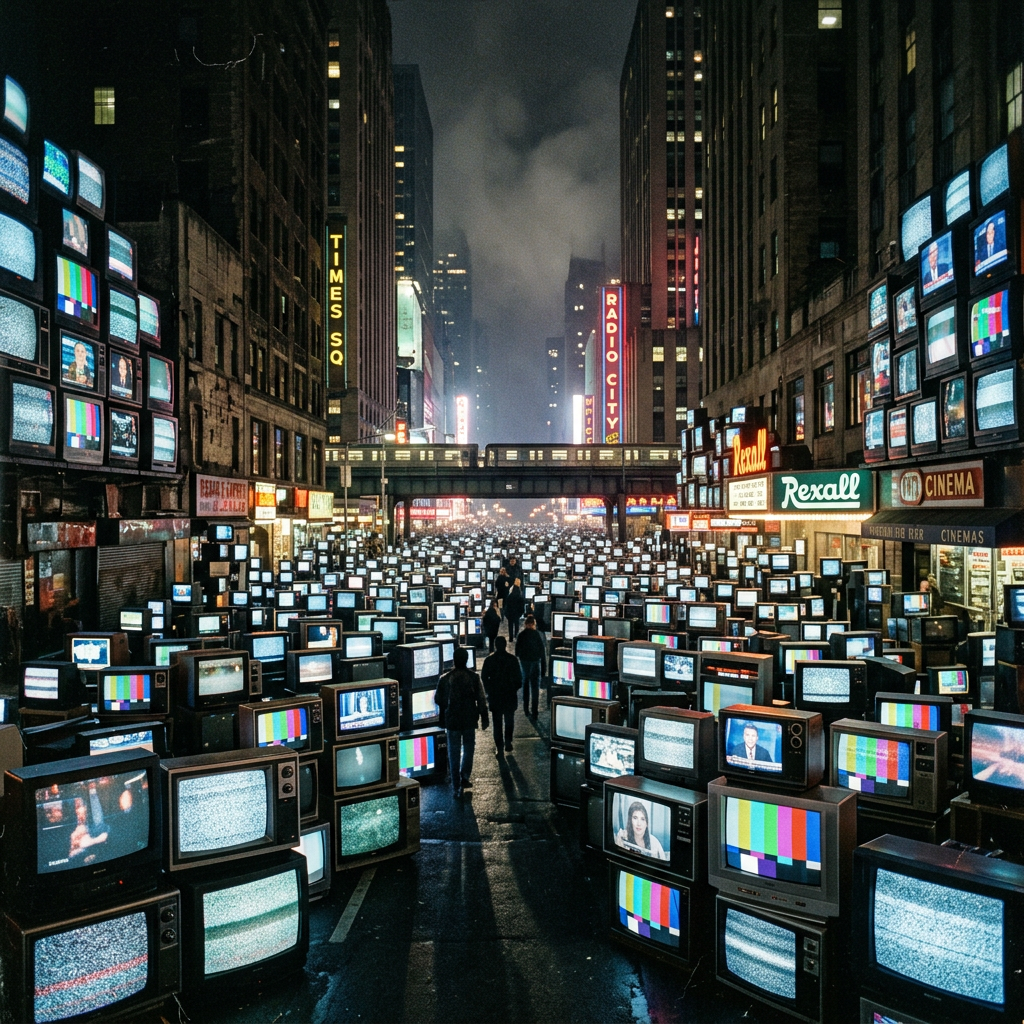
The future isn’t going to be about a shortage of content.
It’s going to be a shortage of judgment.
We’ll be surrounded by campaigns that are polished, optimised, personalised, similar and entirely unnecessary.
Work that exists simply because it could. That’s a dangerous trap.
Because creativity was never about producing the most things.
It was about producing the most interesting things.
The most surprising. The most human. The most worth making.
The winners won’t be the people who can generate the most options.
They’ll be the people with the confidence to delete ninety-nine of them.
To choose. Something that gets harder when there is more.
To know the difference between possible and worthwhile.
That’s not a technology problem.
It’s a taste problem.
The machines are teaching us an important lesson.
Making something is becoming easy.
Knowing whether it’s worth making is becoming everything.
Just because you can doesn’t mean you should.
And in the years ahead, that might become the most important creative brief of all.


