Advertising. Ideas are easy. It’s the caring that costs.

“The simple act of caring is heroic.”

Edward Albert

There’s a quiet, persistent mistake the industry keeps making about creatives.

A kind of polite delusion. We say “creatives come up with ideas,” as if that’s the job. As if that’s the mountain. But coming up with ideas is not the job. It’s barely the foothills.

Anyone can have an idea.

A sweaty planner doing pilates on a Saturday afternoon.

A client in a taxi on the way to the airport to miss a flight.

A stressed strategist in a workshop with too many Post-its.

Even AI will happily give you 500 versions before you’ve finished a coffee. But what if nobody cares about them? What if we start to live in a world where you just go with the first answer. What if nobody tried to make any of those 500 ideas better?

That’s why we need caring.

Caring is a million choices nobody is asking a creative to make. Small details. Is it funny? Could it be funnier? Is that the right car? Should it be a car? The right colour? Maybe black and white? Is this shit? Maybe I should start again. A million little choices that nobody cares about. But creatives do. It’s why they work late. It’s why they work weekends. So they can reach that invisible line in their head.

And nobody talks about it. Partly because you cannot put “cares too much” on a timesheet. Partly because it sounds unprofessional to say you love something that doesn’t exist yet.

Caring is not rational. It is not tidy. It is not polite.

It is ridiculous, obsessive, inconvenient, and occasionally career-limiting.

It is also the only reason anything great ever gets made.

Because every idea is born fragile. A baby. Actually, a baby trying to put their finger in a plug. And the world is designed to flick that switch, if you don’t care, really care, obsessively care.

If you don’t, the idea never becomes anything. And by that I mean it becomes average. OK. Fine. Pretty nice. Quite good.

An idea doesn’t die because it wasn’t great. It dies because nobody cared enough to keep it alive while it was weak.

People think creatives are idea machines.

Wrong.

Creatives are idea shepherds.

The job is to look after something long before others see its potential.

To fight for it when it’s still trying to stand.

Ideas survive because someone on the team cared unreasonably. Someone who couldn’t sleep. Someone who couldn’t let go. There is no job description for that.

The industry keeps mistaking the spark for the fire. It keeps thinking the value is in the moment of invention, when really the value is in the months and months of stubborn, irrational protection that follow.

The hard part isn’t the idea. The hard part is the caring.

And maybe that’s the real crisis in the industry.

Thinking that having ideas is the hard part and not understanding that it’s making a million choices after the idea that really matters. One word for that is taste but I prefer caring.

Nobody asks for it. But trust me, you will miss it when its gone.

Creativity. Why do people still go to art galleries?

Recently I was in Melbourne with a spare afternoon. My wife Minky and I decided to go to an art gallery. It was very full. I asked myself a simple question. Why do people still go to art galleries? Those paintings and sculptures are all available online. Why do people bother? What is it that makes them go? Why do they want to see something real? The answer brings me very neatly to the way things might go going forward. Let’s be honest. Right now, many of us are looking for answers. Now I am not saying this is the only one. But it could be.

I believe in the future there will be two worlds. Very fuzzy. But definitely there.

There is an old line from Ernest Hemingway: “If you are lucky enough to have lived in Paris as a young man, then wherever you go for the rest of your life it stays with you, for Paris is a moveable feast.” I’d like to borrow its spirit and say the desire to be surprised, to encounter something un-digitised, un-algorithmic, will stay with us too. Even as the world fractures into two realms. One of pure information and one of real experience. People still go to art galleries because somewhere inside us lives the hunger to be astonished. We want to find things we were not looking for. Things we could not imagine. And most importantly, we want those things to have meaning to us.

In 2020 the pandemic hit very hard. Galleries and museums closed or drastically reduced visits. One survey found that almost 70% of museums reported a loss of more than half of their annual visitors.  

In theory this could have been the end of them. Yet by 2023 an analysis of the world’s largest art-museums showed visitor numbers returning to or above pre-Covid levels. In the US, one survey in 2024 found that 33% of adults reported going to a museum in the past year which is slightly above pre-pandemic norms.  

What does this tell us? That despite the convenience of online culture, people still make the pilgrimage to physical spaces. Because in a gallery you can’t just scroll. You enter, stand in front of something, let it work on you. There is surprise. A painting you didn’t expect. A corridor. A light shifting. A distinct smell of the building. The surprise of presence. The delight of experience.

Galleries bring something that the smartphone cannot. Scale (the large canvas, the installation), context (you among others, visitors, the architecture), unpredictability (what will the next room reveal?). They are places where time slows. Where you feel like you are somewhere as opposed to connected to everywhere.

As I said I think there will be two worlds. Information vs. Experience. And yes, I get the lines will be very blurred. And yes, these worlds will collide and sometimes be the same thing. But, and this is the important thing, I believe humans will crave both. And you could argue, the stronger one gets, the more we will crave the other. We need to really pay attention to this. As the matrix becomes stronger, it’s the glitch that will become special.

I also believe as our business evolves this will have a profound impact on the industries future.

1. The World of Information

This is the realm of instant, infinite and optimised. News feeds, algorithmic recommendations, e-books, streaming art talks, virtual galleries. It’s data-driven. It’s efficient. It’s everywhere.

In this world you can acquire knowledge, you can consume content, you can do all the things. But you do so through screens, through interfaces, through pre-filtered systems. The surprise is usually well-engineered. The unexpected is often moderated. This world will be the most important operating system and the glue between a billion things.

2. The World of Experience

This is the realm of presence, object, surprise and encounter. The physical art gallery. The music concert. The bookshop. The theatre. A place where you can say I was there. A physical encounter or space where you are not exactly sure is going to happen. Which is the point. You are part of the experiment and the outcome. The conversation with a stranger about a painting. The brush of a page. The building’s acoustics. The musician screaming fuck for 30 seconds because they just feel like doing it.

In this world you are the audience. You sit in the moment. You allow the unknown to happen. This world is about that one unexpected thing you remember.

And humans will always crave this. Because no matter how many gigabytes we stack, no matter how many e-versions we read, there is a part of us that longs for the unknown. We like the thrill of not knowing exactly what will happen next.

We will increasingly live in a world where information is easily delivered, but where experience becomes the scarce currency. And something that is scarce has enormous value.

In that sense, the quote about Paris being a moveable feast applies. Our culture of experience becomes a feast that moves with us. You might carry the memory of that painting, of that passage in a book, that musician screaming fuck in your face. And like Paris it stays with you. We want things to stay with us. We want things to feel special and have meaning to us. As humans.

Perhaps that’s the essential difference. Information can change the way you think. But experience changes you at an even deeper level. An experience becomes yours. It becomes you. It is also one of the main reasons we get up in the morning. It is why we live.

And that is a pretty big difference.

Creativity. Can we please have a bit of culture around here?

“Home’s where you go when you run out of homes.”

John le Carre

We want to be part of popular culture. A phrase that you hear a million times in advertising. It’s one of those phrases. Like make it go viral. There are many phrases like this in our business. They are said so often and kind of sound good, so we don’t have to think too much about it. But for a second why don’t we think – what is popular culture?

In 1976, the Sex Pistols spat out Anarchy in the UK and the world shook. Punk wasn’t music. It was a fist. A uniform. A movement that smashed through the walls of culture and left the establishment rattled.

That can’t happen again. Or probably never in that way again.

Not because people don’t feel rage. Or alienation. Or hunger. They do. It’s because culture itself has shattered. Into fragments. Into niches. Into endless little rooms where everyone can be loud, but no one can be heard by everyone at the same place at the same time.

Back then, culture was narrow. A few TV channels. A few magazines. A few record shops. A scene in London could suddenly feel global because there were only a handful of doors to walk through.

Now? A million feeds. A billion algorithms. Every subculture has its own stage. No one needs to break into the mainstream. Because there isn’t one.

Movements don’t build anymore. They spike. A TikTok sound goes viral on Monday. Dead by Friday. Micro-movements everywhere. Nothing that unifies. Nothing that terrifies.

Rebellion hasn’t died. It’s just lost its shock value. When everyone is rebelling in their own feed, rebellion stops being a movement. It becomes background noise.

And that matters for advertising to be a part of popular culture. Because it can be done. But you better do it this week. It changes the speed and shape of how we do things. It changes advertising.

Once, brands could ride a single wave for a while. Punk. Grunge. Hip-hop. You could borrow the energy of a movement. Today there are no big waves. Only ripples. Brat lasted a summer. We speak about trends rather than movements. Now, you speak to tribes. Algorithms slice your message into niches. The danger? Trying to belong everywhere means standing for nothing anywhere.

People keep asking me: what’s the next punk?

I am not sure there is one. Or perhaps how it manifests will be very different. Punk wasn’t about sound. It was about scarcity colliding with mass culture. It was about one giant stage, and someone brave enough to spit on it. That stage doesn’t exist anymore. Yes, we all have stages. But I am not sure that stage exists anymore.

Instead of one explosion, we get a thousand sparks. Scattered. Personal. Democratic.

Maybe that’s better. Maybe not. But here’s the truth: a movement can only be massive when the culture it’s fighting against is massive too.

And that kind of culture? It’s gone. Or gone somewhere else and is waiting to be found.

That’s not a knife. That’s a creative team.

“Great things are done by a series of small things brought together.”

Vincent Van Gogh

Advertising is a strange place at the moment. Much is changing and will probably continue to do so. A lot of fear and concern. Many questions and uncertainty. So, to cheer us all up I thought I would start to celebrate the ingredients that have made advertising great. One of those ingredients is ‘the team’. The creative team. Bill Bernbach put copywriters and art directors together in the 60’s and that changed advertising forever.

But it also had another strange unintended effect. It gave creatives a kind and gentle first audience. Your partner. In a great creative team you don’t have a critic but a collaborator. I think this changed advertising more than we will ever know. In those hard, very silent meetings, you had at least one person laughing at your script. The value of the team is that it keeps ideas alive a little longer. You can come up with stuff you couldn’t come up with individually. You get confidence to give things a crack. And on a good day you genuinely believe you can achieve anything. Belief. Something many think is not vital. Until of course they don’t have it. And then your world is paralysed. You have all the work but you still don’t know what to do.

So, yes things are changing. But for a brief moment let’s acknowledge the power and mystery of what truly great creative teams have created. If you have ever worked with any you will know how astonishing they can be.

While I was thinking about this I started watching a documentary about the making of a very famous movie on the plane. I didn’t know anything about this particular film but sometimes you get lucky. I don’t think I could have found a better example of the power of a creative team and what belief can do.

In 1986, three amateurs made a film in the Australian outback.

The director Peter Faiman had never directed a film. The writers John Cornell and Paul Hogan had never written a movie. Paul Hogan had also never acted in one. But John Cornell and Paul Hogan believed in each other. This project was based purely on friendship and trust.

The budget for this independent film? $8 million Aussie dollars. Much of this came from mom and pop investors in Australia who also believed.

The return? $370 million US. Second only to Top Gun in the USA in 1986.

The movie was Crocodile Dundee.

By the rules of the industry, it should have failed. But it didn’t. And the reason is brutally simple: two people believed in each other enough to try. And that sentence might be the most important sentence I have ever written. In a world of data and certainty, trying, is one of the most important and underrated qualities of a creative team. They go where others will not. And that’s how you do something new.

It’s also what makes ideas live. Not process. Not pedigree. Not 100 page decks. Relationships. Trust. That tiny flicker of “I see what you see” when the rest of the room is rolling their eyes. And believe me that moment is everything. When one person says I will go with you. It can change everything.

Every piece of great work or idea in advertising is born the same way. It starts with a conversation that doesn’t make sense to anyone else. It lives because one creative pushes and another protects. It gets made because enough people believe in it. But that journey begins with two creatives believing in it and each other first. The beginning is everything.

Ideas are fragile. They get killed by fear, by compromise and by ego and politics. The only thing that gets them through the storm is people who believe enough to risk looking stupid. Those creative teams that are willing to be stunt doubles for their ideas.

That’s why people will always matter in this business. Because they have belief.

And belief lets you get conquer fear. It lets you go to places you didn’t know you could. Or do things that go against conventional wisdom. It lets you do what has never been done. New things, like making one of the biggest movies in the world with the first film script you have ever written.

It doesn’t make sense.

Until it does.

Cannes. The truth is nobody bloody knows.

“We drive into the future using only our rearview mirror.”

Marshall McLuhan

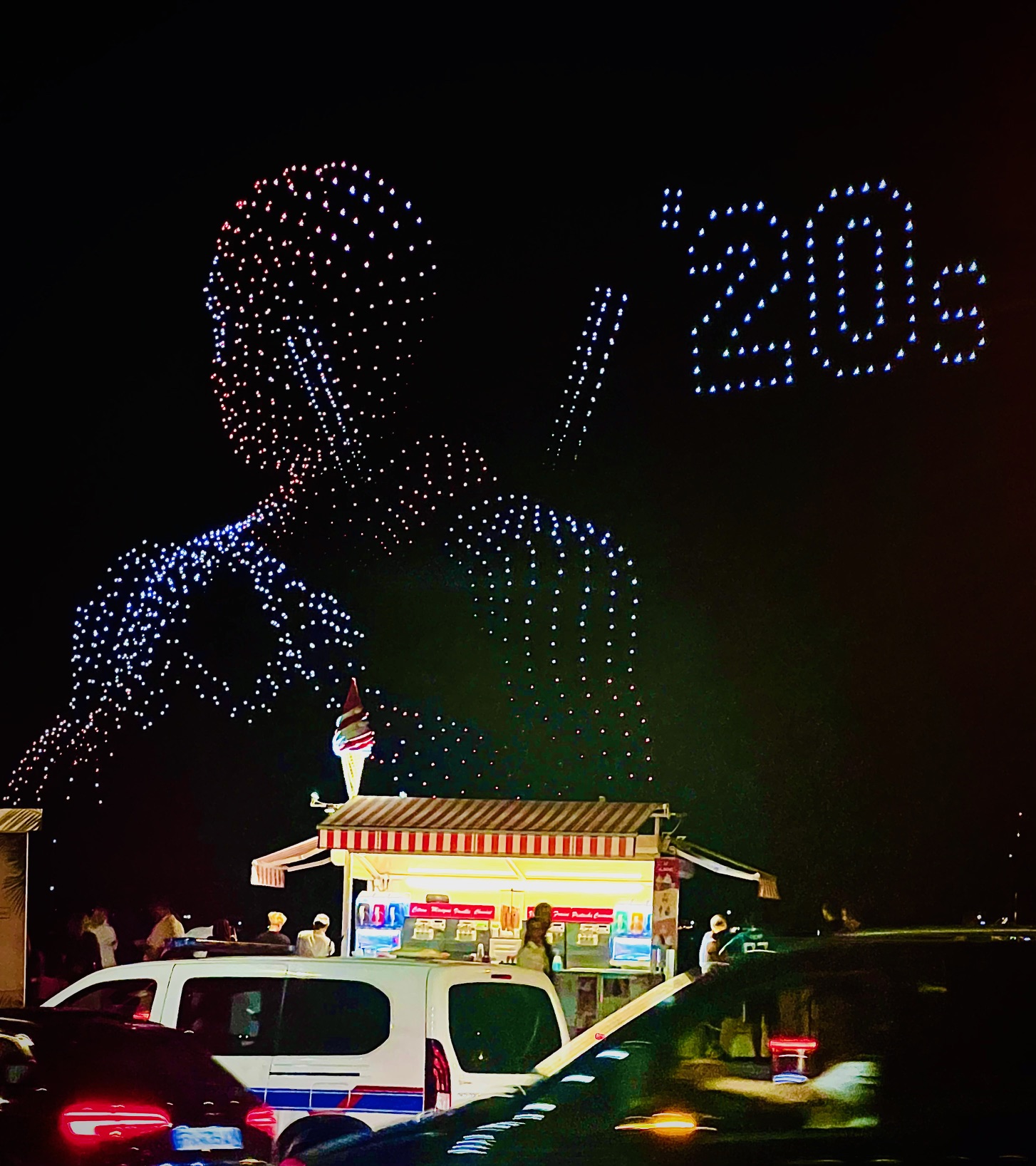
This one will be a little different. Cannes is normally a mirror to the industry. But this year it was a kaleidoscope. It showed us many possible futures. An endless array of possibilities that will forever change things. It was weird, you could see something and the exact opposite of it at the same time. And because there was so much of it, it felt close to madness with beautiful weather. It was feverish. It was the upside down. So, each day I wrote a paragraph. An impressionistic paragraph of what I heard and saw. And most importantly, the feeling Cannes gave me. These are those paragraphs

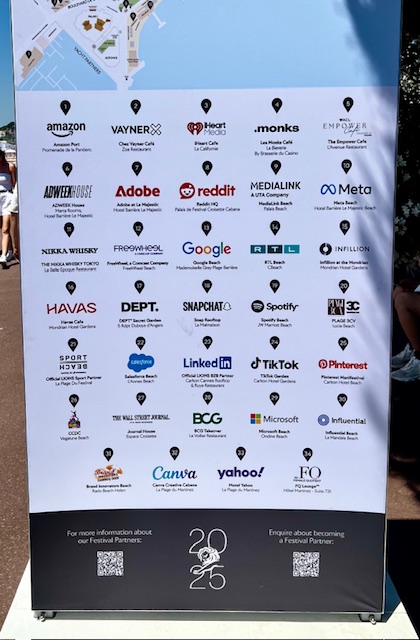
Monday. 2025 and the best advertising is still in the Palais and the worst advertising is just outside of it. It is bad but very honest. Flyers and handouts. Wristbands that get you into something very exclusive. You know, for you and 6000 other exclusive people. Inside, people nurse jet-lag while whispering and staring at endless boards. There are always groups of people on little tours. With them is an advertising tour guide who explains the work to the group. For some reason they always sound like they had a roll in Bridget Jones Diary to me. Spontaneous hugs and kisses happen throughout the day when former comrades bump into each other after years and thousands of miles apart. This is the only place in the world this happens. And from personal experience, it is one of the best things about Cannes. In the end, it is always the people right?

Outside, a million lanyards in the sun. You will perfect the lanyard glance over the week. This is where you pretend to remember someone’s name but have just glanced down at the lanyard. The way you win is to do it before they have had time to look at yours which makes things beautifully awkward. And then you walk around a corner and see a man smoking a cigarette like it’s their last idea. You see their assistant screaming into the phone. It has to be a table for fucking eight. It just has to be. Please God give me a table for eight.

Tuesday. Cannes has always been a paradox. A place where ideas are worshipped and ignored in equal measure. It is a temple to creativity, and yet creativity can become the sideshow because of how the industry is changing. I wonder how many people that go to Cannes actually go to the shows and look at the work? The best work reminds you of what it means to feel something real, and the worst forgets feeling altogether. You hear people on stage who keep saying A.I won’t take your job it will assist you in doing your job better. Meanwhile huge job cuts are happening globally in the advertising industry. Like I said, a paradox. Whatever you think, you will hear the opposite. So, in the end, your opinion is all you have. With all that extra information and knowledge, your opinion is still your only compass.

Wednesday. The Carlton terrace has a slow madness. Not the loud kind at first, but the kind that builds. It started with laughter, loud and sharp like the crack of a starter’s pistol. Then comes the conversation. The boasting. The energy. The pretending. And the believing.

Men in linen blazers with glazed eyes clutch glasses full of melting ice. Women vape with one hand and text with the other. Everyone is talking. Nobody is listening. I heard a man from London pitching an idea to a man from São Paulo who didn’t speak English but nodded anyway. And then they both laughed and agreed it was a great idea.

It seemed like every conversation was about A.I and what will happen to holding companies. Or that there will be thousands of Indies and the industry will rise again. Machines will advertise to machines. Or how in-house is definitely the way forward. Or there needs to be a new this or we definitely have to kill that. But the truth is nobody knows for sure. So we will do what we have always done. We will try some shit. And doing is always the answer for us. Later on, leathery men who are perpetually tanned speak like generals at war, like prophets with talking points. There’s confidence in the way they stir their drinks, but their eyes flicker when they think no one’s watching. Some say the industry’s dying. Some say it’s just being reborn. I think it’s doing both. I think it always is. The kaleidoscope of Cannes would seem to agree.

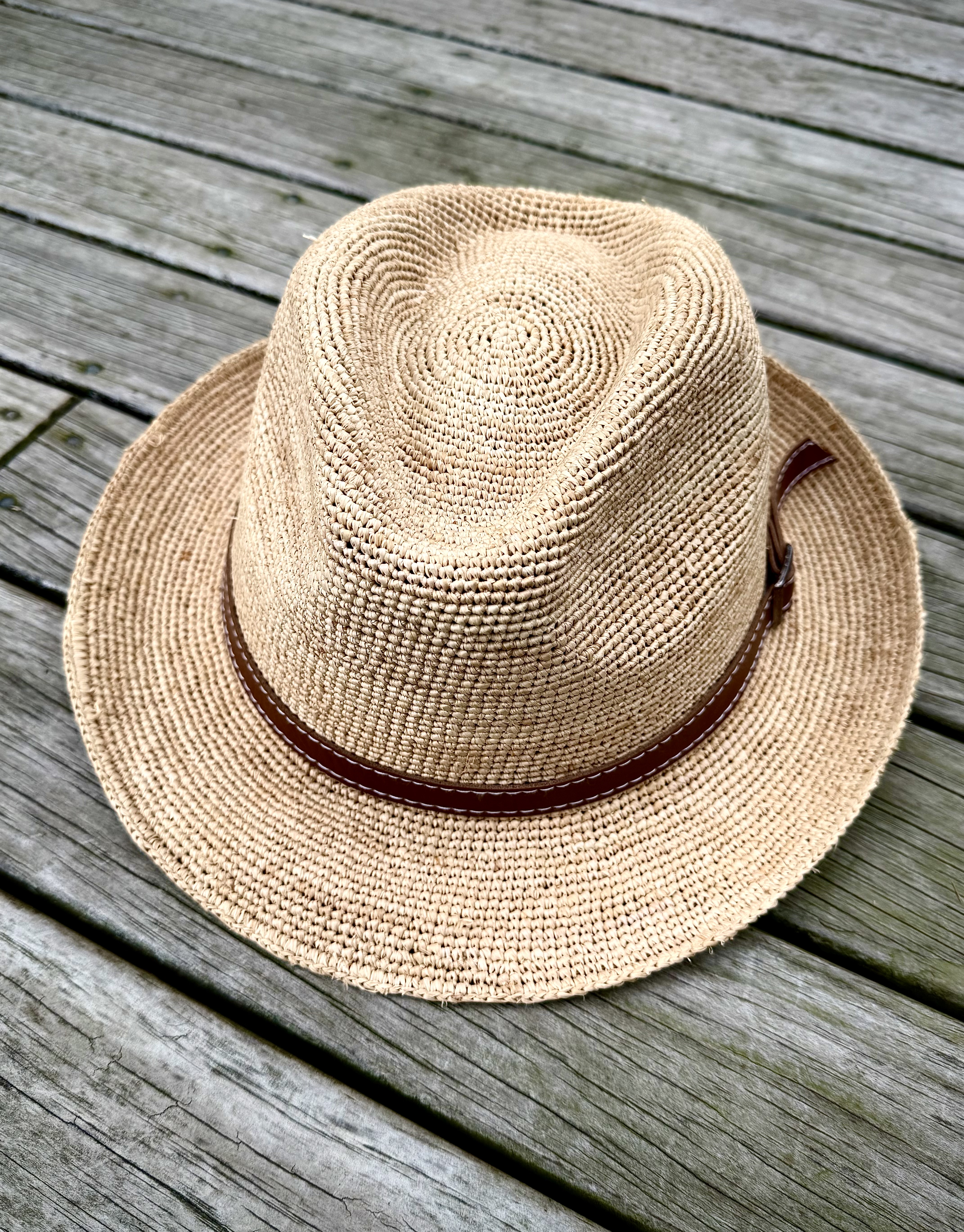
Thursday. What I do know is there is less space for hat salesmen on the Croisette. Every year I buy a hat from them. It’s a little tradition. The little guys with tables of straw fedoras and knock-off sunglasses, get pushed further back each year by pop-up brand temples and LED billboards selling crypto cologne and purpose water. The Croisette used to have cracks in it—room for the hustlers. Now it’s polished smooth, all sheen and certainty. But I miss the hat salesmen. Triumphantly, they had returned by Thursday. They had fought back. This made me smile. They didn’t pretend to change the world. They just tried to sell hats in the heat. There was honesty in that.

Friday. I have decided to follow the words of the famous screenwriter William Goldman. He said, Nobody knows anything…Not one person in the entire motion picture field (insert preferred industry) knows for a certainty what’s going to work. Every time it’s a guess and, if you’re lucky, an educated one. Nobody knows anything. They never have. But they talk like they do—loud, rehearsed, confident. Predictions wrapped in buzzwords—they’re just stories we tell to make the chaos feel planned. We really should give chaos a bit more love. It’s what built this great industry of ours. And for some reason, this gave me an enormous sense of wellbeing as I flew through a very unpredictable Middle-East to get home. With apologies to Blur.

The one thing I do know is the future won’t be like all the self-proclaimed experts say it will be. It never is. The future doesn’t take notes at a keynote. And when it comes, it won’t announce itself.

It never does.


Creativity.The value of water on the smoke.

“Some people never go crazy. What horrible lives they must live.”

Charles Bukowski

Some of you may find this shocking but not all ideas are the same. I find many speak about ideas like they are loaves of bread. Give me 10 of those and three of those. Perhaps that’s where we are. The amount is more important than the quality.

So to bolster my argument, I thought I would give you an example of an idea that could be incredibly rare in the future. The reason ideas like this will happen less and less is because of less time, and the fact that the starting point of the process makes very little sense. Unless you have ever tried to come up with new ideas.

I’ve often said that people want the result of creativity without the process. So why does that matter? The first reason is because the process itself often gives you bonus ideas. Ideas you can’t explain that can be way better than what you had in the first place. These are ideas you can’t explain and ideas you never find without the process The second reason I think the process matters it helps you end up somewhere different. And different as a destination means there is no precedent. No map. No best practice. It doesn’t exist. You have to make it exist. Out of nothing. So to a point, you could start anywhere. It is like wandering into a bookshop, picking up any book, and seeing where it takes you. Many ideas have happened this way. It’s scientific name is – trying weird shit.

Take my example of Mr Ritchie Blackmore. It is December 1971. Deep Purple, a band that probably could be considered the father of heavy metal, were writing songs. The lead guitarist Ritchie Blackmore was hunting for a riff. Now for a moment, if you don’t know, try and guess where the most famous guitar riff in rock history comes from. Hours of playing? LSD? Another band? Nope.

It comes from listening to Beethoven. Beethoven’s 5th to be exact (watch the interview above). And then going, you know, it would be pretty cool if you just sort of reversed it. Smoke on the Water, a song that begins with the most famous heavy metal riff in the world comes from Ludwig Beethoven. In reverse. This could of been a very stupid idea. But this time it wasn’t.

An idea like that comes from trying things without knowing if it will work. I will say that again. An idea like that comes from trying things without knowing if it will work. Doodling. Trying dumb shit. Being comfortable just playing around. Great stuff always comes from a place of not knowing.

Creativity is not one answer. It is a series of answers. And ones you often don’t expect. You just have to go there. And how do you get there. By not knowing and going anyway. That is actually the value of creatives. They go where others won’t.

And in a world that is all about knowing, perhaps ideas that come from not knowing might become a lot more valuable.

After all, we all know how to get to average. There has always been plenty of that. But to get to the most famous riff in rock history – you have to try dumb shit.

It’s a lesson we should never forget.

Advertising. How do you rob a bank without going into a bank?

“Look at the world around you. It may seem like an immovable, implacable place. It is not. With the slightest push – in just the right place – it can be tipped.”

Malcolm Gladwell

I will get to the bank robbery question in a second but first baby powder.

There is an old advertising story/myth that I have heard in various forms over the years that goes like this. The people at Lever Brothers wanted to sell more baby powder. In order to do this they got the smartest and brightest advertising and marketing people in a room for a week. At the end of each day a cleaning lady would come in to empty the bins. At the end of the week, after a forest of post-its and incomprehensible white boards, marketing jargon and very complicated ideas they had not really got anywhere. They were stumped. They didn’t really know how they were going to sell more baby powder. The cleaning lady came in at the end of the day as she always did. She could see everybody was a bit down so she decided to offer up an idea.

Why don’t you make the holes bigger?

And that’s what they did.

Common sense.The ability to actually see a problem and solve it simply will always have tremendous value.

And now a fantastic story from Malcolm Gladwell’s new book Revenge of the Tipping Point.

Meet Robert Sheldon Brown and Donzell Thompson known as Casper and C-Dog on the streets of Los Angeles. In the early 80’s they figured out the main problem with bank robberies. You had to go into the bank to do it. So, Casper came up with the ingenious idea of producing bank robberies. He would recruit others to do it for him. And this simple idea let him rob way more banks that anybody had ever done before or since. He ‘produced’ 175 bank robberies which remains the lifetime bank-robbery world record.

Disruptive thinking. The ability to change the rules to create new opportunities will always have tremendous value.

The truth is as an industry we often sell these kind of ideas. But how often do we apply this kind of thinking to ourselves? How much has advertising changed structurally in the last 50 years? An eye is not very good at looking at itself is it?

But I feel we do need to look at ourselves. I would argue that if advertising was a building right now it is not just the wallpaper that is changing but the bricks and mortar. We need to match the external disruption with the same amount of disruption internally. Jack Welch once said when the rate of change inside an institution becomes slower than the rate of change outside, the end is near. A bit of a downer Jack. But if there was ever an industry who can deal with insane change it is advertising. It’s what we do every single day.

This change also provides a massive opportunity. But the time has come to practice on ourselves what we preach to others. To grasp the potential value, we have to see the problem clearly and change the rules that we have come to accept about our industry as immutable.

Look, it works on baby powder and bank robberies. It should bloody well work on advertising.

Remembering Ari.

I wanted to put some words down as a tribute to my friend Ari Weiss who recently passed away.

I first met Ari when we both worked at DDB. He had just been made Global Creative Director. We were pitching for a massive global piece of business. It was a pretty stressful situation. Flying in from around the world. Multiple rounds and presentations. Jet lag mornings. Lots of agencies trying to win. You get the picture.

When I first met Ari I remember wondering if he perspired. He reminded me of Roger Federer. Not only because of the white shoes. But you got this feeling he could get to the ball twice as quickly with half the effort. You know, you are playing really well but you still lose the set 6-2 and don’t really know how it happened.

So Ari was very talented and yes he had very high standards. However, he had another very distinct talent. He had the ability to make everybody feel equal and part of something. He made you want to be better in a gentle yet unrelenting way. Make no mistake, the work was going to be good but he wanted everybody to get there together. In a business that is often all about ego, that is a rare and beautiful quality. Ari didn’t have to be the front man as long as the band got to the right song. His humility made you focus on what mattered and it gave you a strange creative confidence.

I lived in New Zealand and Ari was in New York so we would talk a lot but only see each other a couple of times a year. And for some reason Ari and I would always go for long walks when we would meet up. I am pretty sure that wasn’t my idea because my knees are buggered. We went for walks all over the planet. San Francisco, Miami, Mumbai, Cannes and London. We would talk about everything but the thing I remember the most was how much Ari listened. Everything you said was considered always with humour and kindness. It created a quiet space where it felt you could solve any problem. I will miss those walks.

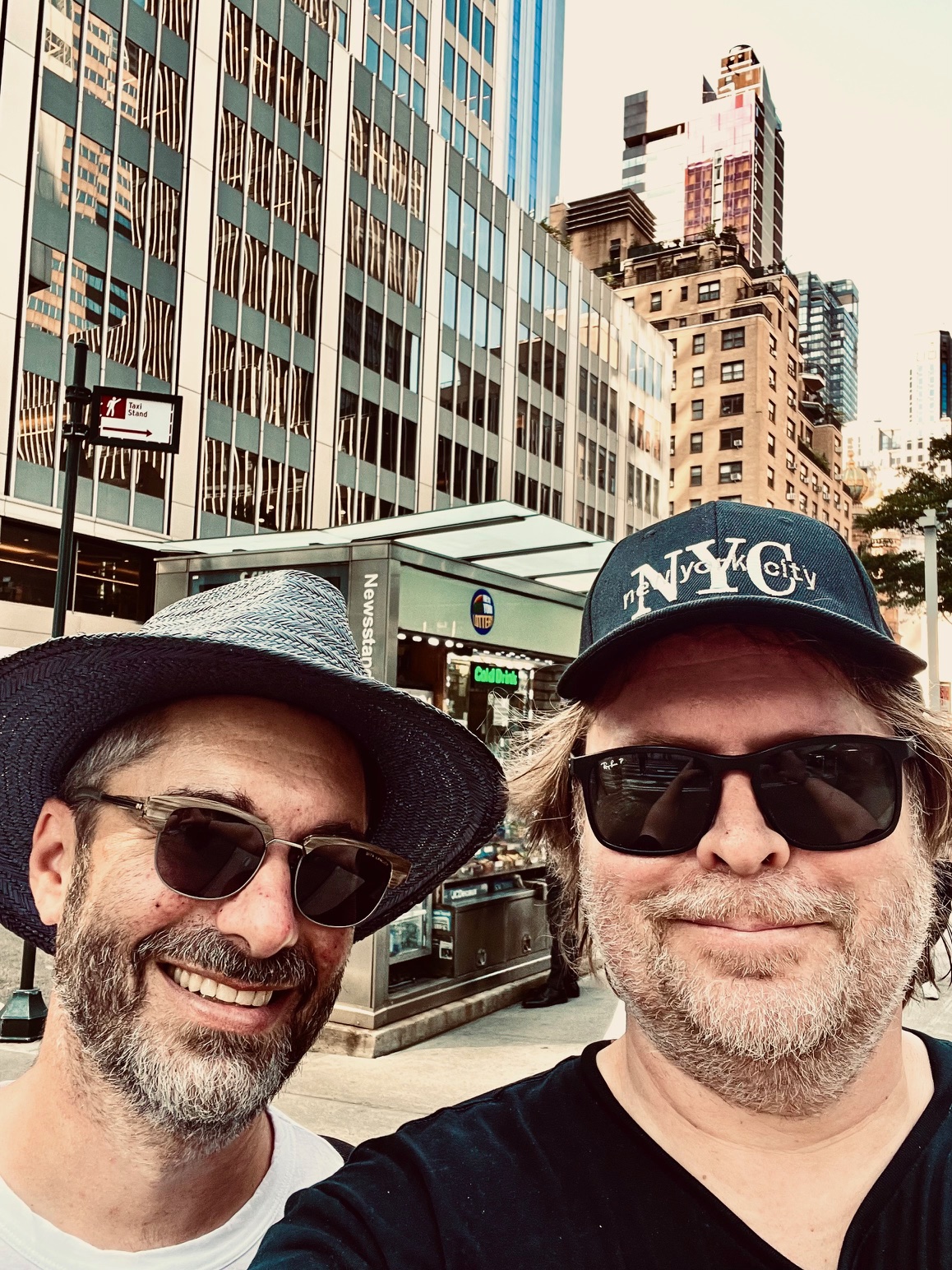
The last walk I went on with Ari tells you the most about him. We no longer worked for the same company. I went to New York on holiday with my family. I hadn’t seen Ari for a while and reached out to him to go for a walk. Now, he was leaving his global job and about to start his own agency. Stress. I am also sure his health wasn’t great. He had a family. He was busy. He didn’t have to do this. But he did. He gave me his time. Which today seems unbearably precious.

We walked and talked for two hours in Central Park. We found the quiet space again to solve the worlds problems and then took the photo above.

C.S Lewis once said humility is not thinking less of yourself, it’s thinking of yourself less. For me that was Ari. He balanced intelligence with humility. He always wanted quality. He only accepted excellence. But he used his humanity, integrity and his humour to get there.

In a word, Ari was a mensch.

And I will miss those walks very much. Rest in peace amigo.

My deepest condolences to Ari’s friends and family.

As the building changes, the Wild West approaches.

“In all chaos there is a cosmos, in all disorder a secret order.”

Carl Jung

If we go back almost 20 years to about 2005 we started to see a different kind of work in advertising. Work, where the idea that you can’t interrupt what people are interested in but have to be what they are interested in suddenly became the way. Obviously technology and new media channels played a big part in this. Have a look at JZ Decoded from around 2010 or the brilliant BMW Films from around 2001 to see what I mean. There was a feeling everything would change. And it sort of did, but it also sort of didn’t. A lot of these kind of ideas would be at the end of a creative deck. Extra, a nice to have.

I have a theory a lot of this work never happened because it is much more difficult to present than a manifesto in a presentation. But that’s for another blog.

The reality was for about a decade there was an equilibrium between traditional ideas and new thinking driven by technology and new channels. Every year we would go to Cannes and hear somebody say advertising was dying. Normally, this was far more about the wallpaper changing rather than the building. It was cosmetic. The structure of advertising, ad agencies and media remained relatively untouched. Nothing had to really change.

But this year has been different. For many it has been very tough. And I know this from speaking to creatives at gatherings. There was an honesty about how the tectonic plates where shifting inside their companies. Most of the time creatives always tell you their agencies are fantastic and everything is fabulous. This year not so much.

There is an old joke that goes in a nuclear explosion only two things will survive. Cockroaches and advertising. As a business it is incredibly resilient and adaptable. However, I always knew there would come a year where there would be signs where the building was changing. Now, I know some of you may say these signs have been around for a while. Fair enough. But at the risk of incurring your wrath I thought I would put a few signs I have noticed this year that could change our business.

I think in the future we will look back at 2024 and see there was a major sea-change where not just the wallpaper but the form of the business had to adapt. Is this advertising’s Kodak moment? Will the structure of advertising which hasn’t really changed in almost 70 years have to change significantly? These are a few signs and some implications.

Sign 1. The first and most obvious shift is A.I. Yesterday, I saw Coca-Cola had redone their Xmas truck ad using A.I. Was it perfect? No. But it shows what is possible and A.I will improve. It asks massive questions about how content will be generated in the future. This asks difficult questions for ad agencies and production houses. On the other hand, it democratises high end content for much smaller clients who would never have been in the game before. You don’t have to be Nike or the like to do big productions. Both of these questions will change the structure of advertising forever. I know it will take time and there will be some car crashes. But this genie doesn’t go back in the bottle.

Sign 2. Another structural issue will be where people are and how you reach them. Recently, it was reported that podcasts during the U.S elections had more of an impact on the electorate than mainstream television stations like NBC and CBS. Combine a single individual like Joe Rogan with social media and he has more clout than a business that is almost 100 years old. This brings up all sorts of questions about what and where mass media actually is. And how you create content going forward. But it also creates many new opportunities. To reach them, however, will be an uncomfortable ride and a change in the structure of our business. You only have to look at what is happening with massive staff cuts at television newsrooms to see this.

Sign 3. Yesterday, Mike Tyson fought Josh Paul. What a weird sentence. At it’s peak this ‘fight’ was watched by 65 million worldwide on Netflix. A single event the whole world can watch. I know, Travis Scott did it with Fortnite. And I am sure somebody before that. But it is interesting how a single small event can impact and reach the entire world. These ideas have been at the back of decks for a while. But if I go back to some of those ideas of 2005 what they wanted was the technology of the last couple of years. And now it’s here. Technology will change the structure of advertising in a thousand ways going forward. And it’s going to do this whether we like it or not. Yes that is scary but it is also the biggest opportunity ever presented to us.

Bonus feature about the Tyson Paul fight. I am sure we could also have a long discussion about if this is the beginning of global entertainment platforms like Apple and Netflix owning most of the worlds sports rights. Let’s chat in 5 years. Big global brands will be fine. However, I think this will have a major impact on smaller national brands. Global vs Local. Where will they advertise? There will be a divide in how different size brands reach customers. This might mean all sorts of different opportunities for advertising.

There are many other signs I have not mentioned that tell me the building is changing and the wild west is approaching. Each sign says change is coming. To be clear, I believe ideas will always have value. And I believe craft will always be what sets you apart. But I also believe change is coming.

However, if there was ever a bunch of people that thrive and handle change it is the fine humans of advertising.

So, buy a Stetson and a horse. Saddle up. There could be gold in them thar hills.

And remember kids, don’t waste your imposter syndrome.

“I still feel very much an imposter in the whole music scene, which I’m quite happy about to be honest.”

Nick Cave

About a month ago, I was a keynote speaker at the This Way Up Creative Festival in Sydney. The name of my talk was called, ‘What the Fuck is Creativity anyway?’

I worked hard on my talk, as did my wife Minky who did all the brilliant illustrations. For me a 40 minute talk can take a fair amount of time to put together. I didn’t cut corners. I knew what I wanted to say. And yet.

And yet, about two weeks before I spoke I got this feeling. The feeling said you have nothing to tell all these brilliant creatives. Sure, you have been a creative for 25 years but what could you possibly know about the subject. You are an imposter and they will know. I even had a weird dream about being struck by lightning on stage. You know the usual.

The following stat helped me sleep a bit better. In a recent study as many as 82% of us experience imposter syndrome. And according to the same study Albert Einstein had it too. So, if he got it I am pretty sure we all get it.

So that’s the bad news. The good news ? The trick as a creative is not to waste your imposter syndrome. Let me explain.

I asked a few creatives why they thought imposter syndrome happens. And creative director Christie Cooper eloquently solved it in 6 words.

There is no right or wrong.

She is very right. At its very core, creativity is not about right and wrong. There is no one way to do anything. There are many. This naturally creates doubt. In fact, if you don’t have doubt you are probably deluded or not that much of a lateral thinker.

Creativity is good at giving you many and new answers. But the world wants one neat answer. That creates a scary gap. Also, if you are doing something for the first time you can never be completely sure it will work. More doubt. The perfect environment for imposter syndrome.

Over the years, I have come to believe imposter syndrome is actually a part of the creative process. It is torture but it is also a way to test your thinking. A horrendous version of quality control that always appears. You don’t think what you are thinking or making is good enough. But, there is a little spark. There is something there. And if it’s any good, you will protect that thought against all the others. Bizarrely, you protect your idea from yourself. And if it survives it’s probably half decent.

And because I know it will be there I have tried to make friends with imposter syndrome. Actually, If you lean into it, you sometimes find new ideas. It makes you look again. When it came to my talk, I was waiting for it to appear. And it did. It made me look at my fear and pushed me to be honest and vulnerable with the audience about feeling like an imposter. It gave me a strange freedom. My doubts became my fuel. This gave me a whole new opening for my talk. And I committed to it. I backed my fear.

A beautiful picture of me with imposter syndrome

Honesty and vulnerability. Two qualities you definitely need to be creative. However, in our business we usually talk about confidence far more. I think the reason for this is confidence is needed to sell an idea.

However, before confidence, you need honesty and vulnerability to have an idea.

And often, imposter syndrome will give these ingredients to you.

Remember not to waste it.