Never put vinyl in the microwave.
“It is the time you have wasted for your rose that makes your rose so important.”
Antoine de Saint-Exupéry, The Little Prince
I recently read an interesting stat about the resurgence of vinyl. Sales have reached levels last seen in 1996. (I think somewhere around 1.3 million units). I also watched a show called Kitchen Nightmares with Gordon Ramsay shouting at Americans. These two things may seem unrelated which could be a problem for this blog post. But what the hell, lets see if I can join them together.
Let’s start with Gordon Ramsay. In his show, the medicated lady that owns the restaurant microwaves everything. It’s an Italian restaurant and they don’t use a stove. There is nothing on the menu that is fresh and the meatballs look like scrotums that have been in a terrible accident. As you can imagine the food is shit, morale is terrible and they are weeks from closing.
I know it’s a cheesy formula that is the same every week. But stay with me here, what struck me were the similarities between the restaurant and how many bad advertising agencies are run today.
Let me explain. The other day I read an article about creating advertising and the phrase that stuck in my head was one simple sentence. Creative is too important to be left to the creatives. Another way of writing that sentence would be the food is too important to be left to the Chef. The owner of the restaurant tried that and ended up with bland microwave gruel.
The truth is there is a dangerous belief that creativity can come from anywhere. It’s easy to just get loads of ideas off the internet. Well, that may be true. What is far harder to do, of course, is care about those ideas. Which is the real secret. In fact, you can have a hundred ideas and they will all be meaningless unless somebody is passionate about one of them.
This is the ridiculousness of how people think creativity works. You can have as many ideas as you like. They won’t help you without belief. And more importantly, the risk of making a choice.
To use the restaurant analogy again, you can have the best cutlery, crisp white tablecloths and a magnificent degustation menu but it doesn’t mean much without somebody in the kitchen that has passion, belief and taste.
Why are we forgetting this?
Well, lets look at Vinyl. Why has it made a comeback? iTunes, Spotify and the like have made it so easy to get all the music in the world. It has never been easier to get music. Compare that to 30 years ago with people lining up around the corner overnight to buy a new album. You could argue that music has lost its value because it has become so easy to get. Owning an album was an experience now it is just a list in your pocket. It has lost its meaning. It has become a commodity. It has become a loaf of bread. Musicians don’t want that which is why more albums are being released on Vinyl. Take an album like Tommy by The Who or Exit on Main Street by the Rolling Stones. The musicians are giving us an idea and an experience. Not just a list of songs. They want it to mean something.
And, isn’t that what we all want?
Owning a song is not the same as a song belonging to you.
I am not suggesting vinyl is going to replace downloads for a second. That ship has sailed to a sweaty deep house club in Ibiza.
What I do think however is that speed, access and delivery mean very little without meaning. And meaning, will always come from a powerful experience or a great product. Right now, we are in a world obsessed with speed rather than quality. In fact, I think many in our business think it is exactly the same thing. Beware of thinking the generic can replace the personal. It doesn’t. And never will.
Perhaps, what I am saying is that in a world of endless lists to scroll down, crowdsourcing and curation we want to feel like somebody actually gave a shit when they made that special thing for us. And when you feel that, it makes that meal, idea or song better. And those are the moments you remember.
This is true for great ideas, Italian food and making a memorable album.
After all is said and done, we don’t remember the speed, the efficiency or packaging if there is nothing special at the end.
Sometimes, I think we forget, nobody remembers the frame, only the picture.
Sometimes, I think we forget, we only remember one thing.
How it made us feel.
I am going to tell you how to make a lot of money.


Right now we are an industry that is in flux. There are many people who are trying to figure out where things are going. What to do next. We constantly read articles about what advertising will look like in the next 5 years.
There are many who claim they know.
Well, to quote Dan Weiden, nobody knows what’s going to happen next.
And I am with Dan on that one.
The problem with that is it creates a vacuum of uncertainty. And when you get uncertainty you get snake oil salesman.
And what are they selling? The future. Selling the future is the best business to be in because you are never wrong.
Workshops, masterclasses, weekends, ideation, brainstorms and talks. There are loads of them every day. All about the future of advertising. And in the next five years it’s only going to get worse. If you want to make…
View original post 424 more words
This message brought to you by Kim Kardashian’s arse.
This message brought to you by Kim Kardashian’s arse.
The last word in show business is business.
Mae West.
Kim Kardashian is worth 65 million dollars. She also gets payed 10 000 dollars per tweet from various brands around the world to say something nice in less than 140 characters about their brands. And there are many that laugh at her. They say she has no talent. I would agree. But she is worth 65 million dollars. Think about that. Ask yourself why.
Perhaps you remain unimpressed. Well let me tell you what Kim Kardashian’s arse can do.
On the day she unveiled it in Paper magazine she received 307 782 tweets. The Rosetta space mission where the Philae lander landed on a comet received 479 434.
Now, on the one hand, the fact that an almost impossible mission that took 10 years to realise and could change our collective destiny beat Kardashian’s booty restores my faith in humanity. On the other hand, it didn’t win by that much.
I understood why that remarkable mission to dark space received a lot of publicity. I found it harder to understand why Kim Kardashian’s dark space had received almost as much.
This got me thinking about what a brand is these days.There was a time when the definition of a brand was quite simply a promise. Another definition I have always liked is that a brand is the sum of your experiences. Similarly, there was a time when you had to be famous for something noteworthy. Go back 30 years and the distance between a 10 year mission to land on a comet and some racy pictures of a B grade celeb would have been infinitely larger.
So what has changed?
For one, I am not sure if a brand has to be a promise anymore or even an experience. It might just have to be a navigation device. This is something I think search and social media has created. Just finding a brand these days in a world that as Eric Schmidt of Google points out has generated more information since 2009 than all the information ever created in the world before that date is tough.
We have always laughed at celebrities and their need for fame. It all seems a bit silly and desperate. Sure, in the past, fame has always allowed celebs to get to the top of the guest list. What has changed is that this fame or infamy depending on who it is allows them to get to the the top of many other lists. And this creates cash for those people brands. Why? Because we can find them in an endless sea of information. They have become a destination for millions of people. This alone creates value. From a well planned wardrobe malfunction, the odd sex tape and a few deals with the paparazzi it all helps make people brands successful.
If you think it doesn’t, try and explain the strange occurrence of sex tape burglaries in Hollywood. The only thing that gets stolen is a sex tape. No jewellery or cash. Seriously? This has been replaced by hacking into celebs mobile phones who just happen to have loads of naked pics of themselves stored on them. Really?
Another potential reason is how advertising and entertainment have now blurred completely. What this has done has created a sealed system. From Gordon Ramsay to the Kardashian dynasty they have intuitively understood that you can no longer interrupt what people are interested in, you have to be what they are interested in. We now have a large number of people some talented and some almost without merit who have become people brands. 20 years ago, these people would have tried to do a deal with major corporate sponsors. Now, many corporates are talking to them. And, if you understand this system the leverage you can create in terms of publicity and ultimately sales is unprecedented.
Search has fuelled the need for fame. Fame has finally become something tangible. It has become big business. And it is a business advertising should be seriously looking at. It is no longer a separate industry. It is now a part of our industry and a new form of competition. The deals between advertising industry, tech companies and the entertainment world in the last two years show this to be true.
Fame has become a commodity of immense value in a world where being noticed is becoming increasingly difficult for many.
This has massive implications for how advertising will work in the future. Our industry is not getting smaller. It is about to get a lot bigger. Every night we laugh at the banality and stupidity of reality television. Yet, amongst all the bullshit content are perhaps some small clues as to how advertising might change. An integrated campaign is the holy grail of advertising. It would seem the entertainment world and the advertising world are not so different. They are now one.
Mae West said the last word in show business is business. True, but these days Kim Kardashian might say these days good business is showing your business.
Her pics which by today’s standards are not that risqué created 6.6 million views for Paper magazine and literally billions of impressions on social media in a single day.
You might argue those pictures are art. An unhealthy obsession with fame. Maybe harmless entertainment. A social statement of some kind. All of the above? Sure, why not. However, to me it’s just plain old advertising wrapped in a brave new world.
Critics don’t make mistakes because they don’t make anything.
A piece about bravery and listening to yourself.
Critics are like eunuchs in a harem; they know how it’s done, they’ve seen it done every day, but they’re unable to do it themselves.
Brendan Behan
Mistakes. Lately, many people are asking about mistakes.
It’s funny how this happens. As the world becomes obsessed with data and certainty we all start to crave madness and surprises. Contradiction makes the world go round. The only thing we love more than patterns is breaking them. Critics understand patterns. Creatives understand how to break them. With apologies to Kierkegaard, critics see life backwards, creatives have to live life forwards.
Watch any endeavour and you will see this. Let’s take sport.Take Rugby. The ball goes down the back line. A bad pass happens. The ball misses the player hits the ground and goes to the next player. This mistake freezes the defence and disrupts their pattern. The player goes through to score. A…
View original post 333 more words
So Buddha and an ad agency walk into a bar.
The biggest difference between average and great advertising agencies.
I have a theory that there is only one difference between great agencies and average agencies. Intention.
Many people will say talent or process or money. All those things play a role but are powerless if the ship is steering away from what is important. The work. The pressure on agencies is enormous and it is easy to lose focus. I have been inside so called B grade agencies and the only difference between them and great agencies is the work they have thought of are still scamps on a wall or in their bottom drawer. Great agencies make their greatest work, average agencies don’t.
Intention is important for an agency because making great work is hard. An agency needs to make that hardship as natural as possible. That comes from a culture of belief in ideas. And that comes from the leadership’s intention. For many that manifests in having…
View original post 207 more words
Just because you are a great Blacksmith it doesn’t mean you should make cheese.
Many years ago, I was in Cannes and I was introduced to a very enthusiastic young man. He reminded me of somebody who had been sent to a shopping mall to sell books for a cult he had recently joined.
I asked him what he did and he said without a hint of irony that he had been recently promoted to junior creative director. I asked if that was different to being a group head. He said yes, it was completely different and then described exactly what a group head did. I said nothing because he just seemed so fucking happy.
The reason I mention the story is that our business in the last ten years has become full of labels signifying nothing. I believe we should be a lot prouder of the term Creative and Creative Director. They are difficult and distinctive jobs. Labels have overtaken talent and ability. We have started to believe the advert is the product. And sadly, because of this, the word creative has lost some of its power and honour.
It has happened for a number of reasons. The last couple of years has created so many terms and ways of working that this uncertainty has spawned a weird belief that everybody can be creative. In other words, everybody has it, so it isn’t a talent. I think that is bullshit. Especially, when you only have an hour to crack an idea. Being a creative is not about being creative. It’s about being creative under pressure.
If you are a creative you should be very proud. Here’s why.
Our business has grown dramatically in the last 20 years. Just think what an integrated campaign consisted of in 1995. Now, think what it consists of today. It is literally a different business, yet the label has not changed. Integrated campaign. Of course, the amount of time has also remained the same. This has meant a creative now has to do a lot more than was done before within the same time lines. So, what has happened is a creative has had to learn how to up-skill. We have had to learn how to do a lot of different things very quickly.
A creative has to also work with a lot more people who have fancy titles. Words like technologist, innovator and my favourite, future expert, which was on an actual business card. These titles and vague skills are thrown around like meaningless confetti in our business. The problem is some of these people are brilliant and some are not. Some are snake oil salesman selling fake cures to being dated or irrelevant. And you better not choose one of them because we present on Tuesday.
Add to this, input from research, perspectives from strategy, feedback from the client and a mushrooming Tsunami of media options that all may or may not connect to each other as well as the deep internal desire to be brilliant and you begin to experience the shifting tectonic plates creatives are all dancing on. Sounds easy right?
Now, let’s just say you master this dizzying landscape. You become a successful creative. And then you get promoted. You become a Creative Director. And that is a glorious and scary day. The reason it is scary is because you realise all the skills you have acquired are not enough. You have to learn a whole lot of new ones. Up until now you only had to come up with brilliant ideas.
Now, you have to learn how to manage and motivate creatives. You have to care about their ideas. You have to build them up over and over when their ideas die. You have to fight for great work and understand the commercial realities of the client and the agency. You have to be a great showman. You need to be a consummate politician and part time therapist. You must have impeccable judgement and take calculated risks about the future of many ideas that at this point do not exist. Sounds easy right?
The truth is being a great creative is no guarantee of being a good creative director. And may I say, strangely, being a great creative director is not a guarantee of being a great creative.
They are different jobs. Let me repeat this. They are different jobs.
I was very lucky. I became ECD at 32. I was too young for so much responsibility. But I had great teachers. I had support. I would imagine there are a lot of very stressed Creative Directors today who wish they had somebody to ask what to do.
In fact, I know this is true because many around the world have written to me from around the world and told me so.
Being a Creative Director is a strange job because you can never prepare for it. You spend your career trying to get to it and when you do many only have a vague idea of what the job consists of. We need to think about this. Who will teach the teachers?
The truth is not every creative should be a creative director. And we should be fine with that. More than fine. In fact, we should encourage it. We need to make sure labels do not become more important than talent and ability.
As an industry we conveniently forget this. We think if we give somebody a title it gives them the skills too. It doesn’t.

Muhammad Ali and the Talent Code.
Muhammad Ali and the Talent Code.
“It’s not bragging if you can back it up.”
Muhammad Ali
As a boy I was obsessed with Muhammad Ali’s fights. I watched just about every single one. Frazier, Norton and Foreman were his greatest fights. It is interesting to note that they all happened when his youthful talent had begun to wane.
In his youth, he could do things that no other boxer before or since could do. He had gifts. Pure talent. Timing, speed and power. And then he had something else. A strange kind of confidence and bravery. He would win most of his fights before he even stepped into the ring. A relentless charisma that seemed to hypnotise his opponents.Those old black and white films make him seem like he is glowing and floating. At a press conference in 1964 Ali said Sonny Liston was too ugly to be the champ. He was young and he believed in his gifts. And then, he couldn’t fight for 5 long years for refusing to go to and fight in Vietnam. His prime was taken away from him. When he returned he was a little slower and he lost to Joe Frazier. So some might say he lost his talent. I disagree. I would say he had begun to lose one and gain another.
1974 Kinshasa. The Rumble in the Jungle. George Foreman. He had something called an all over punch. Basically the concept was it didn’t matter where it hit you, you would go down. Undefeated. 120 kgs and 6 feet 4 inches.Terrifying. He had destroyed Frazier in two rounds. Nobody on the planet thought Ali could beat him.
In eight rounds Ali didn’t just knock Foreman out. He showed that one man can have more than one talent. His physical skills were diminished but he found a way to win. He beat Foreman with his mind. And that is probably the worst beating a man can take. Foreman retired from boxing soon afterwards.
Ali showed me there were two types of talent. There is the innate talent you have. Ali was born to be a boxer. He had all the skills. And on that day in 1974 he showed a much rarer type of talent.This is a talent you have to go and find. It is in you somewhere. It is made up of life’s experiences and the decision not to yield to your fears. It is not the carefree talent you have when you are young but comes from the bottom of an ocean somewhere. It is immensely powerful. It is dark and brooding. It is the talent you use when everything is on the line. It will conquer those voices in your head. It will make you walk forward. It will show you how to do things that have never been done before.
I think talent is a very convenient word. It describes ability, creativity, bravery and honesty. These qualities are all very different. The truth is that there are many, many different types of talent. Sometimes, for a just brief moment, you will glimpse it all in one man like Muhammad Ali. For the rest of us mere mortals, we only have parts of it. It is like a gigantic and endless code that is in us but is impossible to see in its entirety. Yet sometimes when you are with the right people you can see it for a couple of seconds.
This is why it will be hard for machines to replace human beings when it comes to the strange business of having ideas.When the talent of one person meets another the Universe really does become infinite.
The idea code is not just big it is truly endless. Let me explain. Having ideas depends on who is in the room, or what day it is, and what particular talents are combined. This and about a million other factors that range from what your girlfriend said this morning to the music playing in the background will dictate the ideas that are created. It is remarkable what can be created when there is more than one talent in the room bouncing off each others ideas. And the next day will be different. And the one after that. It is like a Rubik’s cube on crack. It is forever evolving without any need to be solved.
Picasso said the problem with computers are they only give you answers. He was right. Ideas come from life and machines don’t have one. Ideas are not about answers but about possibility. And possibility will always come from impossibility. It will come from going to places nobody has ever been or could imagine. It comes from what does not exist. It goes against the odds and conventional wisdom. It comes from what most believe cannot be done.
A man called Muhammad Ali proved that in 1974.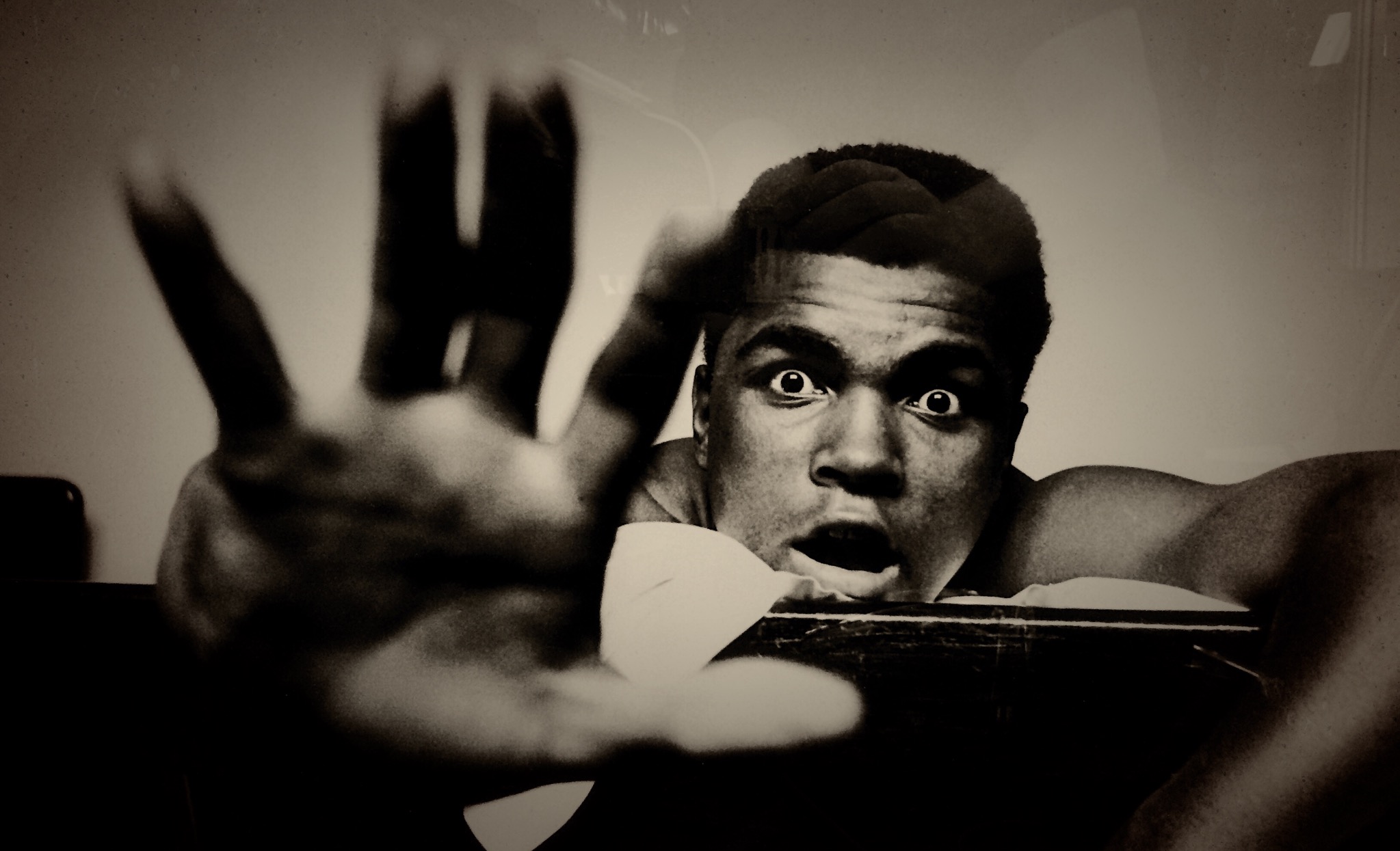
 Damon's Brain